












Inside Elon Musk’s 2025 Blueprint: Tech & Space Ahead
Inside Elon Musk’s 2025 blueprint—explore the next big moves in AI, space, clean energy, robotics, and connectivity shaping the future.
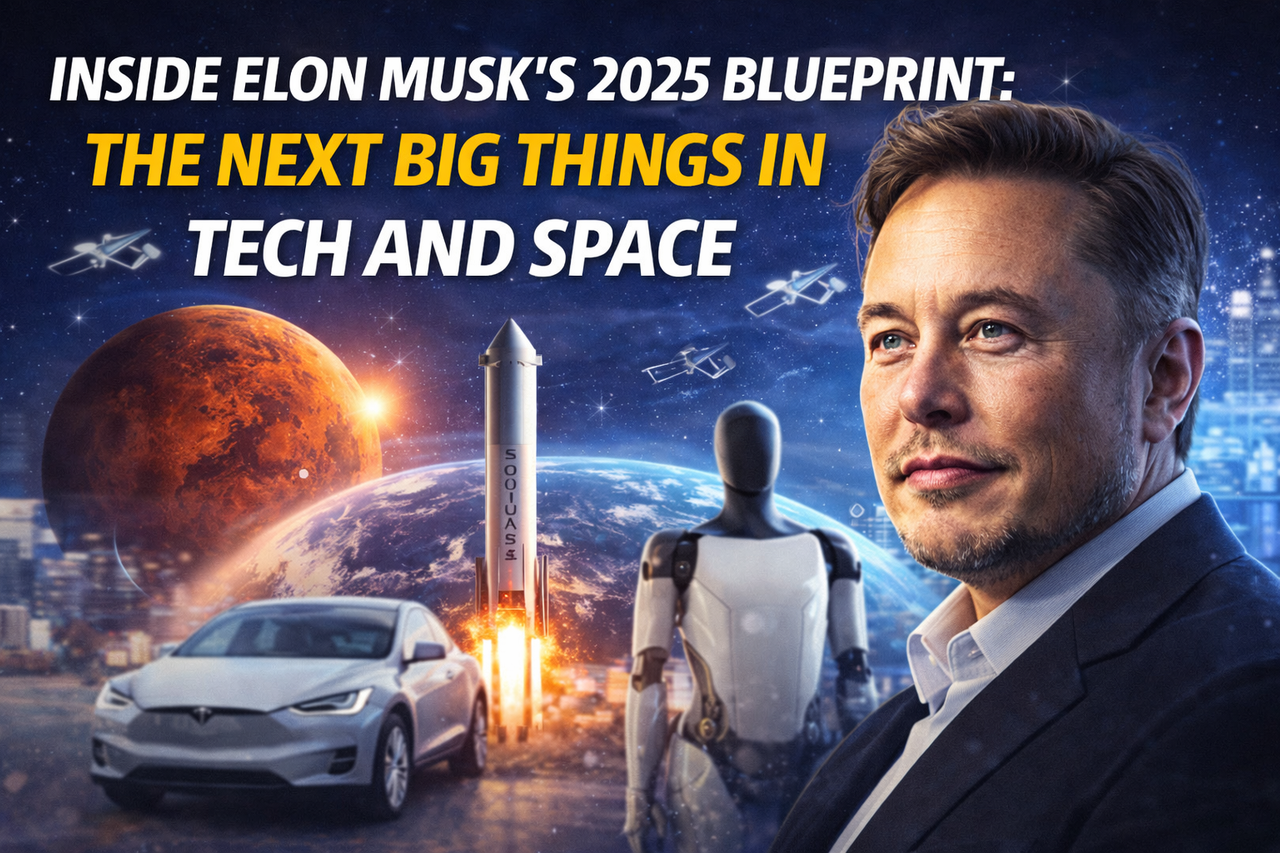
Inside Elon Musk's 2025 Blueprint: The Next Big
Things in Tech and Space
Introduction
Elon Musk has a reputation for building the future in public. Ideas that once sounded impossible—reusable rockets, mass-market electric vehicles, satellite internet—are now part of daily conversation.
As 2025 approaches, Musk’s blueprint reveals a coordinated push across technology and space, with each project reinforcing the others.
This article unpacks the next big things inside that blueprint, focusing on practical impact, timelines, and what everyday users might notice first.
Rather than hype, the emphasis here is on how these plans could realistically shape life on Earth—and beyond—over the next few years.
Table of Contents
What the 2025 Blueprint Means
Musk’s 2025 blueprint is less about a single breakthrough and more about alignment. Multiple technologies mature together to unlock larger gains.
The common thread is scale—solutions that work not just in labs, but across cities, industries, and continents.
Guiding Principles
- Design for scale from day one
- Reduce long-term risk for humanity
- Lower costs through reuse and automation
- Connect systems so progress compounds
AI Built for Real-World Systems
Artificial intelligence in the blueprint focuses on reliability and usefulness. The goal is AI that operates inside complex systems safely.
By 2025, AI is expected to handle planning, prediction, and optimization tasks that humans struggle to do consistently.
Where AI Delivers Value
- Traffic flow and logistics optimization
- Energy demand forecasting
- Manufacturing quality control
- Large-scale data interpretation
A key theme is oversight—AI that remains auditable and controllable as it grows more capable.
Transportation at Scale
Transportation improvements are designed to reduce emissions while increasing safety and efficiency.
By 2025, electric platforms and assisted driving systems could be common in fleets and urban mobility services.
Expected Outcomes
- Lower operating costs for transport networks
- Fewer accidents through assistive systems
- Cleaner air in dense cities
Space Operations and Mars Readiness
Space efforts prioritize routine operations. Frequent, reusable launches are the foundation for everything else.
Mars readiness in 2025 focuses on testing life-support, cargo transport, and reliability—steps that reduce future risk.
Near-Term Space Goals
- High launch cadence
- Rapid turnaround of vehicles
- Lower cost per kilogram to orbit
Always-On Global Connectivity
Connectivity is treated as basic infrastructure. Reliable access enables education, commerce, and emergency response.
By expanding satellite coverage, the blueprint aims to make connectivity resilient to geography and disasters.
Connectivity Benefits
- Remote learning and telehealth
- Business continuity during outages
- New markets for digital services
Energy That Scales Cleanly
Clean energy plans focus on storage and distribution, not just generation. Reliability matters as much as capacity.
By 2025, grid-scale storage and smart energy management could smooth peaks and cut waste.
Energy Focus Areas
- Battery storage at multiple scales
- Solar integration with grids
- Electrification of transport
Robotics as Infrastructure
Robotics in the blueprint are framed as infrastructure—tools that quietly increase productivity.
Early deployments focus on repetitive, hazardous, or precision tasks.
Robotics Use Cases
- Warehouse and factory operations
- Inspection and maintenance
- Assistance in healthcare settings
Human-Tech Interfaces
Human-tech interfaces aim to restore capability rather than enhance it for novelty.
By 2025, early clinical applications may demonstrate meaningful quality-of-life improvements.
Potential Outcomes
- Improved mobility after injury
- Better treatment pathways for neurological conditions
- More precise human-computer interaction
Economic Ripple Effects
As systems scale, economic effects follow. Lower costs and higher efficiency unlock new business models.
Work shifts toward supervision, design, and maintenance of automated systems.
Labor Market Shifts
- Growth in technical and analytical roles
- Reskilling toward digital operations
- New sectors around energy and space
Key Takeaways
- The 2025 blueprint emphasizes scale and integration.
- AI, energy, and connectivity reinforce each other.
- Space progress depends on routine, not spectacle.
- Practical benefits arrive before grand milestones.
FAQs
1. What makes the 2025 blueprint different?
It aligns multiple mature technologies to compound gains rather than chasing a single breakthrough.
2. Will these changes be visible to everyday users?
Yes. Connectivity, transport efficiency, and energy reliability are likely to be noticed first.
3. Is Mars central to the 2025 plan?
Mars work in 2025 focuses on preparation and risk reduction, not settlement.
4. How does AI fit without increasing risk?
The emphasis is on controllable, auditable systems with clear oversight.
5. Are timelines realistic?
Many components are already deployed at smaller scales, making expansion feasible.
Conclusion
Inside Elon Musk’s 2025 blueprint is a strategy built on alignment, scale, and practicality. The next big things are less about headlines and more about systems that work every day.
If executed as planned, these efforts could quietly reshape technology and space operations—delivering steady improvements that add up to transformative change.
What's Your Reaction?