












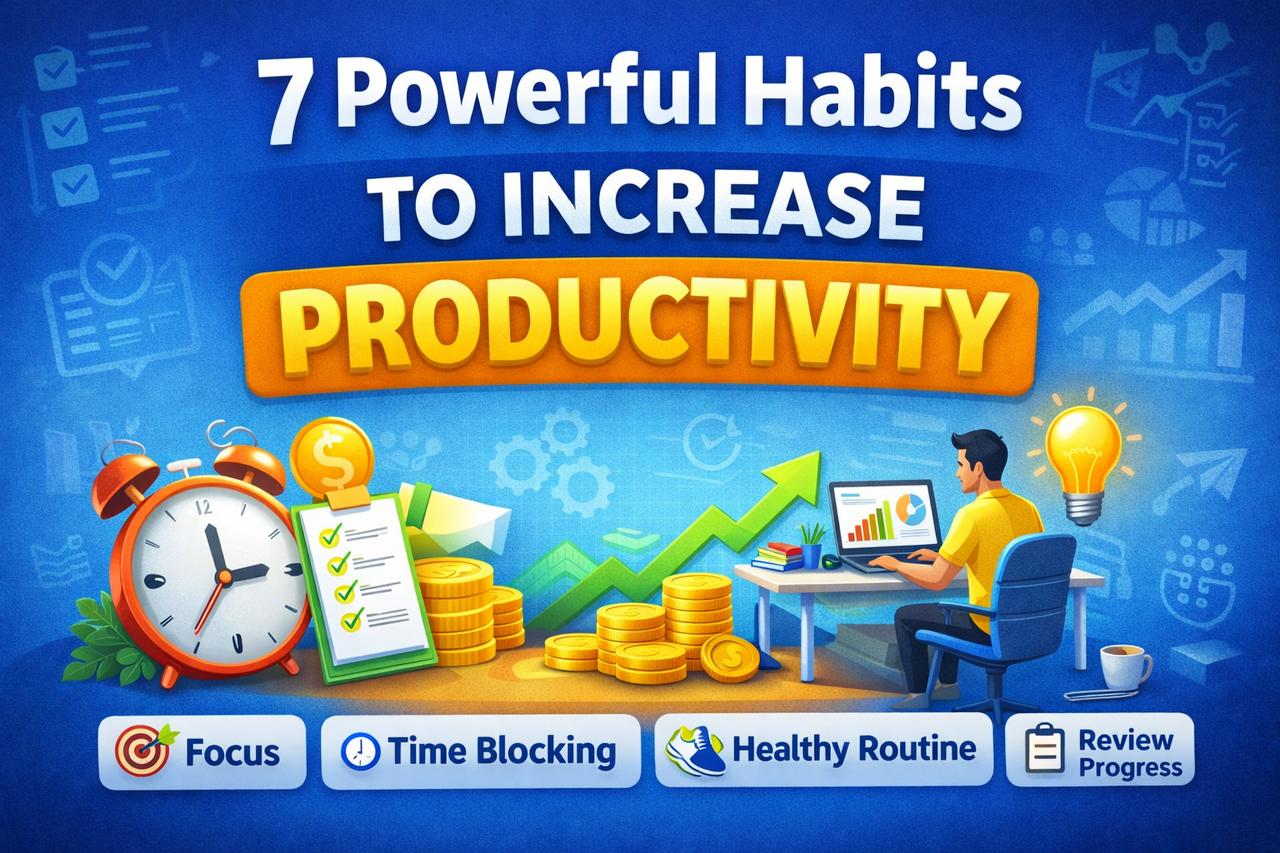





Smart Work vs Hard Work: Which Is Better in 2025? Complete Guide
Smart work vs hard work – which is better? Learn the key differences, benefits, examples, and how to combine both for maximum productivity and success.

⭐ Smart Work vs Hard Work – Which One Is
Really Better? (2026 Guide)
Introduction
Success looks different for everyone — but the debate remains the same: should you work harder, or should you work smarter? Some people believe long hours and relentless effort are the real path to achievement. Others say smart planning and efficient execution matter more than raw effort.
The truth lies somewhere in the middle. Hard work builds discipline and mental strength, while smart work helps you use time, tools, and strategies more efficiently. When you understand the difference clearly, you can redesign the way you think, learn, and succeed.
This 2026 guide explains what smart work and hard work really mean, how they impact productivity, and how you can combine both to achieve faster, lasting success in your career, business, studies, and personal life.
Table of Contents
What Is Hard Work?
Hard work means putting consistent effort, time, and dedication into your goals. It is about showing up every single day — even when you don’t feel like it — and pushing forward with discipline.
Characteristics of Hard Work
- Long working hours
- High physical or mental effort
- Strong focus and persistence
- Repetitive practice
- Commitment to routine
Hard work develops character, resilience, and self-control. Successful athletes, entrepreneurs, doctors, and creators all rely on years of hard work to sharpen their skills.
What Is Smart Work?
Smart work means achieving more in less time by planning better, prioritizing important tasks, and using tools or strategies to simplify effort. It does not replace hard work — it optimizes it.
Characteristics of Smart Work
- Planning and goal-setting before execution
- Using technology, tools, and shortcuts
- Focusing on important, high-impact tasks
- Strategic thinking
- Continuous learning and improvement
Smart work helps you reduce stress, save time, and increase results without burning out.
Key Differences Between Smart Work & Hard Work
| Hard Work | Smart Work |
|---|---|
| Focuses on effort | Focuses on results |
| Time-consuming | Time-saving |
| More repetition | More innovation |
| Physically or mentally exhausting | Mentally strategic |
| Slow growth | Faster progress |
Both are valuable — but using them at the right time is the real key.
Real-Life Examples: Smart Work vs Hard Work
Example 1 — Studying
- Hard work: Studying 8 hours daily without direction.
- Smart work: Studying important topics, using summaries, mock tests, and spaced revision.
Example 2 — Office Work
- Hard work: Doing all tasks manually.
- Smart work: Using automation tools, templates, and time-blocking.
Example 3 — Business
- Hard work: Calling customers one-by-one.
- Smart work: Using digital ads, CRM systems, SEO, and automated emails.
Smart work increases outcome efficiency, while hard work strengthens discipline.
Benefits of Hard Work
- Builds strong self-discipline
- Improves consistency and determination
- Helps overcome obstacles
- Creates lifelong productive habits
- Earns respect and trust from others
Hard work creates the foundation on which success stands.
Benefits of Smart Work
- Saves time and energy
- Delivers faster results
- Encourages creativity and innovation
- Supports better decision-making
- Helps maintain work-life balance
Smart work ensures you don’t waste time or effort on low-value activities.
So, Which One Is Better?
The honest answer: you need both. Hard work gives you the strength to keep going. Smart work gives you the direction to move faster.
Without hard work, smart work is weak. Without smart work, hard work becomes slow and exhausting.
The ultimate success formula:
Hard Work + Smart Work = Maximum Results
How To Combine Smart Work & Hard Work
1. Plan Before You Start
Create a roadmap so you don’t waste energy on unimportant work.
2. Focus on High-Value Tasks (80/20 Rule)
20% of your efforts produce 80% of your results. Identify those key tasks.
3. Use Tools & Technology
- Automation software
- Productivity apps
- Templates & AI tools
4. Stay Consistent
Even the smartest plan fails without regular effort.
5. Keep Learning
Up-to-date skills turn effort into excellence.
6. Track Progress
Measure results and improve your strategy continuously.
Smart Work vs Hard Work in Daily Life
Business
Smart work helps scale marketing and automation. Hard work ensures strong customer relationships and service.
Fitness
Smart work = correct diet & targeted exercises. Hard work = daily workout discipline.
Studies
Smart work = topper-style strategies. Hard work = daily revision and practice.
When both combine, performance multiplies.
FAQs — Smart Work vs Hard Work
1. Is smart work better than hard work?
Smart work saves time and increases efficiency, but long-term success still requires consistent hard work behind it.
2. Can I succeed with only smart work?
Success requires discipline — and discipline is developed through hard work. So both are necessary.
3. Which approach is best for students?
A balance of both — strategy plus daily practice — gives the best results.
4. Does smart work reduce stress?
Yes, because it helps you prioritize and finish tasks faster, avoiding unnecessary workload.
5. How can I move from hard work to smart work?
Start planning, use tools, set priorities, measure results, and constantly improve your working style.
Conclusion
Smart work helps you achieve results faster, while hard work develops the discipline to stay consistent in the long run. Real success happens when both systems work together — planning, effort, strategy, and dedication aligned toward a single goal.
As you move forward in 2026 and beyond, don’t choose between smart work and hard work. Instead, master both. Work harder where it matters — and smarter wherever possible. That balance is the real secret to growth, success, and peace of mind.
What's Your Reaction?