














How to Start Fitness in 2026 – Complete Beginner Gym Guide
Want to start fitness in 2026? This complete beginner gym guide explains workouts, diet basics, mindset, mistakes to avoid, and how to stay consistent.
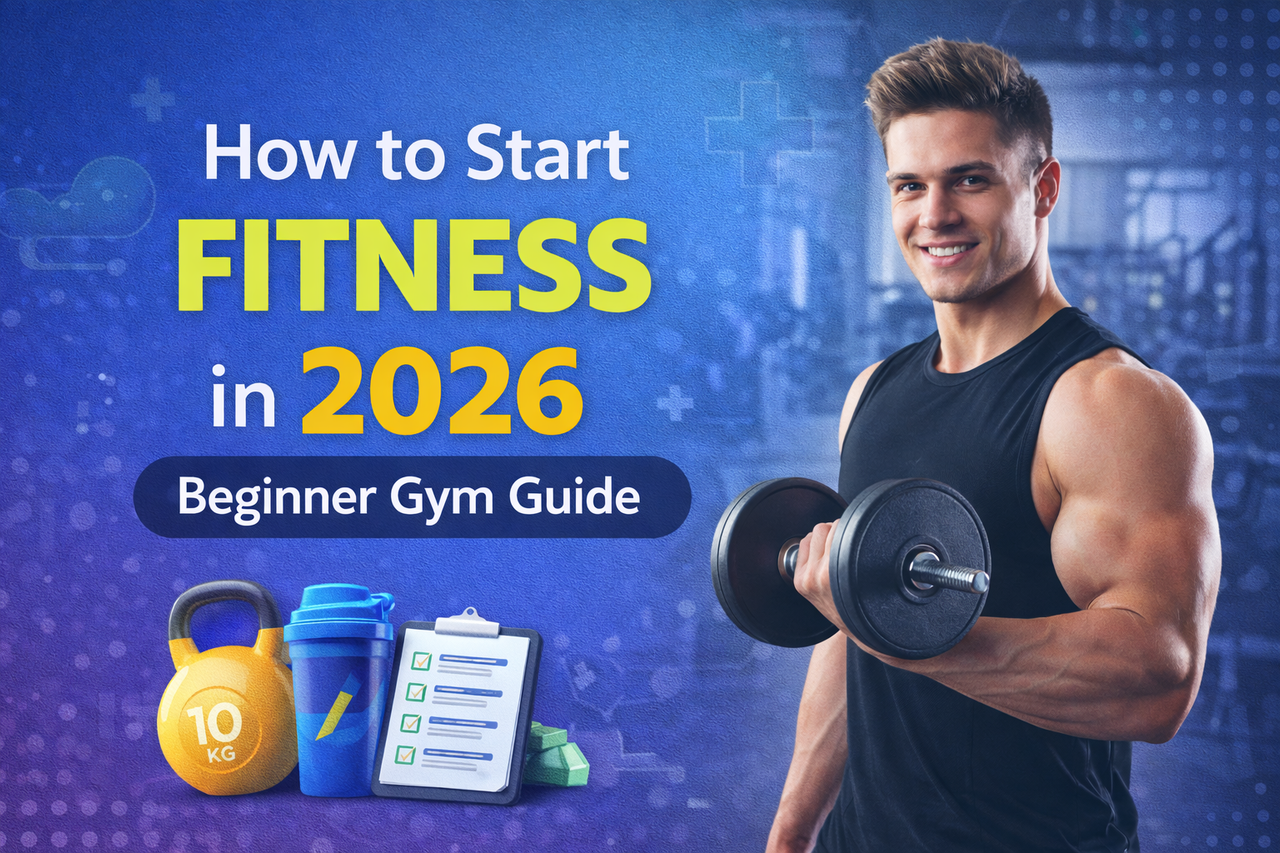
How to Start Fitness in 2026 – Beginner Gym Guide
Starting fitness for the first time can feel overwhelming. Many beginners feel confused about workouts, diet, gym machines, and whether they are doing things correctly. In 2026, fitness is no longer just about looking good — it is about staying healthy, active, and mentally strong in a fast-moving lifestyle.
This beginner-friendly guide is written for anyone who wants to start fitness the right way. Whether you plan to join a gym or simply improve your physical health, this article will help you understand the basics clearly, without complex terms or unrealistic promises.
Table of Contents
- What Fitness Means in Real Life
- Why Fitness Matters More in 2026
- Building the Right Fitness Mindset
- How to Start Fitness Step by Step
- Simple Gym Workout Plan for Beginners
- Beginner-Friendly Diet Guidelines
- Common Fitness Mistakes Beginners Make
- How to Stay Consistent and Motivated
- Frequently Asked Questions
- Final Thoughts
What Fitness Means in Real Life
Fitness does not mean having a perfect body or extreme muscles. True fitness means your body feels energetic, your movements feel easier, and your mind feels calm. A fit body helps you perform daily activities without getting tired quickly.
Fitness includes strength, flexibility, stamina, balance, and mental well-being. When all these areas improve together, you feel healthier and more confident in everyday life.
Why Fitness Matters More in 2026
In today’s lifestyle, people spend long hours sitting, staring at screens, and dealing with stress. Physical activity has reduced, while health issues have increased. This is why fitness has become essential in 2026.
- Helps maintain healthy body weight
- Improves heart and lung health
- Boosts energy levels
- Reduces stress and mental fatigue
- Improves posture and mobility
- Supports better sleep
Fitness is no longer optional — it is a basic requirement for a healthy life.
Building the Right Fitness Mindset
Your mindset decides whether you succeed or quit early. Many beginners lose motivation because they expect fast changes. Fitness progress takes time, and that is completely normal.
Before starting, remind yourself:
- Everyone starts somewhere
- Progress is slow but steady
- Consistency matters more than intensity
- Comparison only creates pressure
Focus on becoming better than yesterday — not better than others.
How to Start Fitness Step by Step
Step 1: Select a Comfortable Gym Environment
Pick a gym that feels welcoming, secure, and suits your comfort level so you can focus on your workouts with confidence. It should be clean, not overcrowded, and have basic machines. Friendly staff and trainers make a big difference for beginners.
Step 2: Begin with Light Exercises
Your body needs time to adjust. Start with light weights or bodyweight exercises. Learning correct movement is more important than lifting heavy.
Step 3: Never Skip Warm-Up
A good warm-up helps your body get ready for movement by loosening muscles and joints. It reduces injury risk and improves performance.
Step 4: Focus on Proper Form
Wrong posture can cause pain or injuries. Always prioritize correct form over the number of repetitions or weight.
Step 5: Maintain Regularity
Working out 3–4 times a week consistently is enough for beginners. Avoid overtraining.
Simple Gym Workout Plan for Beginners
This beginner workout plan is easy to follow and focuses on full-body development.
Day 1 – Full Body
- Brisk walking or cycling – 10 minutes
- Bodyweight squats – 3 sets
- Chest press machine – 3 sets
- Seated row or lat pulldown – 3 sets
- Basic plank – 3 rounds
Day 2 – Cardio and Core
- Elliptical or treadmill – 20 minutes
- Crunches – 3 sets
- Leg raises – 3 sets
- Stretching exercises
Day 3 – Strength Focus
- Leg press – 3 sets
- Shoulder press – 3 sets
- Biceps curls – 3 sets
- Triceps pushdowns – 3 sets
Always allow at least one rest day between workouts.
Beginner-Friendly Diet Guidelines
You do not need an extreme diet to start fitness. Simple, balanced eating works best for beginners.
- Drink enough water throughout the day
- Add vegetables and fruits to meals
- Include protein sources like eggs, lentils, or dairy
- Limit processed and sugary foods
- Eat at regular times
Healthy eating supports workouts and improves recovery.
Common Fitness Mistakes Beginners Make
- Skipping warm-up or stretching
- Trying to lift heavy weights too early
- Not resting enough
- Following random workouts
- Extreme dieting
Avoiding these mistakes helps you stay safe and consistent.
How to Stay Consistent and Motivated
Motivation may fade, but habits keep you going. Beginners can stay consistent by:
- Setting small weekly goals
- Tracking workouts
- Noticing energy improvements
- Exercising with a partner
- Focusing on long-term health
Fitness becomes easier once it turns into a routine.
Frequently Asked Questions
1. How often should beginners exercise?
For someone just starting out, training a few times each week is more than enough.
2. Is gym mandatory for fitness?
No. Fitness can be started at home, but gym provides structure and equipment.
3. When will visible changes appear?
Energy and strength improvements usually appear within a few weeks.
4. Are supplements required?
No. Beginners can rely on normal, balanced meals.
5. Can older adults start fitness?
Yes. Fitness can be started at any age with proper guidance.
Final Thoughts
Starting fitness in 2026 is a powerful step toward better health and confidence. You do not need perfection or shortcuts. Consistency, patience, and a positive approach are enough to create long-term results.
Start slowly, listen to your body, and enjoy the process. Fitness is not a short challenge — it is a lifestyle that supports you for life.
What's Your Reaction?