
















7 Powerful Habits To Increase Productivity (2025 Guide)
Discover the 7 most powerful productivity habits that help you stay focused, save time, reduce stress, and achieve more every day. A practical productivity guide for students, professionals and entrepreneurs.
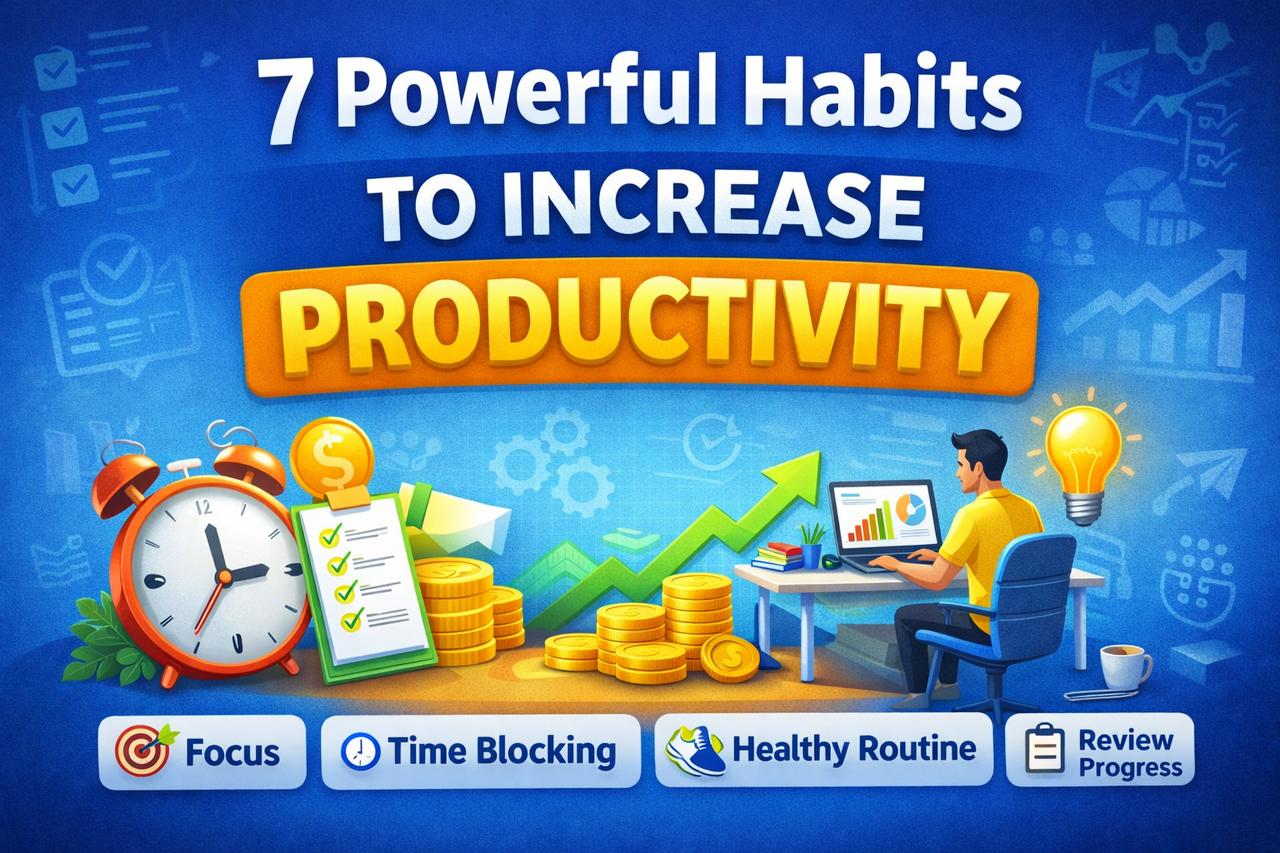
7 Powerful Habits To Increase Productivity
In today’s fast-paced world, productivity has become one of the most valuable skills. Whether you’re a student, entrepreneur, freelancer, or working professional — staying productive helps you finish work faster, reduce stress, and achieve long-term success.
But the truth is, productivity is not about working longer hours. It is about working smarter, managing your energy better, and building habits that support focus and clarity. This article explains seven powerful productivity habits that you can start practicing from today — simple, realistic, and effective.
Table of Contents
- Habit 1 — Set Clear Daily Goals
- Habit 2 — Focus on High-Priority Work First
- Habit 3 — Plan Your Day Using Time-Blocking
- Habit 4 — Reduce Distractions and Digital Noise
- Habit 5 — Take Short and Meaningful Breaks
- Habit 6 — Build a Healthy Lifestyle Foundation
- Habit 7 — Review and Improve Your Day
- FAQs
- Conclusion
Habit 1 — Set Clear Daily Goals
Productivity always begins with clarity. When you start your day without defined goals, your mind jumps from one task to another — leading to confusion and wasted time. Setting simple daily goals keeps you organized and purpose-driven.
How to Set Goals Effectively
- Write down 3–5 tasks you MUST complete today
- Break big tasks into smaller steps
- Keep goals realistic — avoid overloading your day
Habit 2 — Focus on High-Priority Work First
Most people stay busy — but not productive. The difference lies in priorities. High-priority tasks bring real results, whereas low-value work only fills time. Successful people identify and complete meaningful tasks first.
The popular 80/20 Rule states that 20% of your efforts create 80% of your results. Focus your energy on this 20%.
- Do important work when your mind is fresh
- Avoid multitasking — it reduces efficiency
- Say “no” to unimportant work
Once your key tasks are completed, the rest of the day automatically becomes easier.
Habit 3 — Plan Your Day Using Time-Blocking
Time-blocking means dividing your day into dedicated work segments. Instead of randomly juggling tasks, you assign a fixed time slot to each activity — such as work, meetings, study, planning, or relaxation.
Benefits of Time-Blocking
- Keeps your day organized
- Reduces stress and confusion
- Prevents procrastination
- Improves focus
This structure ensures your mind knows exactly what to expect — helping you stay disciplined.
Habit 4 — Reduce Distractions and Digital Noise
Modern distractions are silent productivity killers. Constant notifications, social media scrolling, useless browsing, and unnecessary chats break your concentration and increase mental fatigue.
Common Distractions
- Mobile notifications
- Frequent email checking
- Background noise
- Unplanned interruptions
Create focus-zones — fixed times when you disconnect from distractions and work deeply.
Habit 5 — Take Short and Meaningful Breaks
Your brain cannot stay in high-focus mode non-stop. Short breaks recharge your energy, refresh your thinking, and prevent burnout. The key is to take planned breaks, not random distractions.
Healthy Break Ideas
- Stretch or walk for 5–10 minutes
- Drink water
- Practice deep breathing
- Sit quietly away from screens
Many productive people follow the 50–10 rule: work 50 minutes and take a 10-minute break.
Habit 6 — Build a Healthy Lifestyle Foundation
True productivity depends on your physical and mental health. Lack of sleep, unhealthy food, dehydration, stress, and inactivity weaken concentration and memory. A healthy body supports a powerful mind.
Focus On
- 7–8 hours of quality sleep
- Daily movement or light exercise
- Balanced meals
- Plenty of water
- Limiting junk food and excess caffeine
Even small improvements in your lifestyle can significantly boost productivity and mood.
Habit 7 — Review and Improve Your Day
The final habit separates average performers from highly productive people — self-reflection. At the end of the day, take a few minutes to review what worked and what didn’t. This continuous learning mindset helps you improve faster.
Ask Yourself
- What did I achieve today?
- Where did I lose time?
- How can I work better tomorrow?
Simple daily reflection prevents repeating mistakes and keeps you growing every day.
FAQs — Productivity Habits
1. How long does it take to build productive habits?
Most people start noticing improvement within 2–4 weeks of consistent practice.
2. Does productivity mean working more?
No. Productivity means working smarter, with focus and intention — not longer hours.
3. Do breaks reduce productivity?
Not at all. Short planned breaks refresh your brain and prevent burnout.
4. What is the biggest enemy of productivity?
Constant distractions, lack of planning, and multitasking.
5. Can students also use these habits?
Yes. These habits help students focus better and manage study time more effectively.
Conclusion
Productivity is a lifelong skill that develops through discipline, intention, and the right habits. When you set clear goals, prioritize meaningfully, control distractions, take care of your health, and reflect daily — your performance improves naturally.
Remember, small daily improvements create massive long-term results. Start with just one habit today — and gradually build the productive life you deserve.
What's Your Reaction?